Written by Dr Georgios Siskos, Ophthalmic Surgeon (FEBO). Last updated: November 2026.
In brief
The eye examination is a cornerstone of prevention and of proper care of vision, for both children and adults. It is not only for those with obvious vision problems, but also for those who want a preventive check of the health of their eyes. It is important to know that many eye conditions progress without obvious symptoms and are detected only by a complete examination, which is painless and safe.
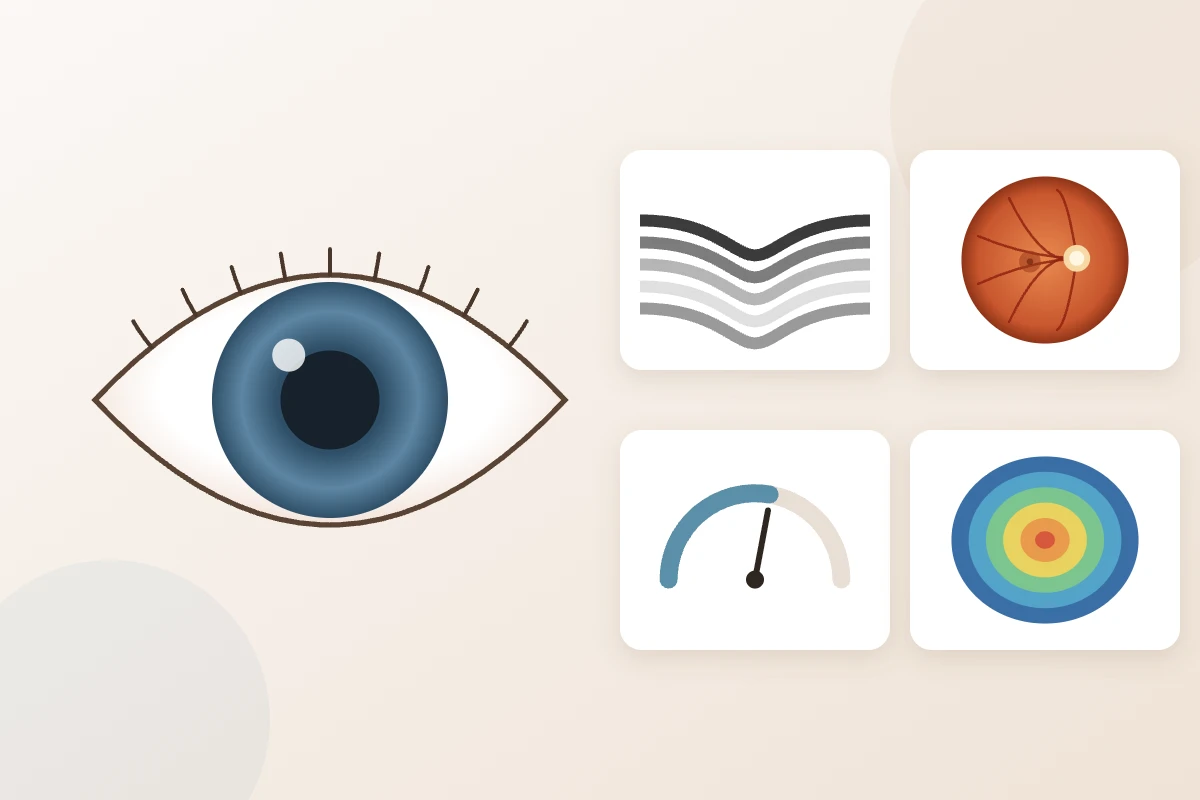
For every patient, as part of the standard examination, we carry out:
When needed, the examination is completed with additional tests, such as visual fields.
The aim is not simply to correct vision properly, but above all to diagnose early the conditions that can permanently affect visual function.
Rarely. At our practice the back of the eye (retina, macula, optic nerve) is recorded with a fundus camera and OCT, without drops. Dilating drops are needed only when a finding calls for a more detailed examination. In that case near vision is blurred for a few hours and you must not drive.
Examination of children is particularly important, even when there are no obvious symptoms. Conditions such as amblyopia, strabismus or significant refractive errors often go unnoticed. Early diagnosis allows effective treatment and normal development of vision. Read more on our paediatric ophthalmology page.
We recommend an annual preventive eye examination for everyone, children and adults.
Read also what to expect at your first visit to the practice.
▶ Watch the videos: short videos by Dr Siskos on eye health and check-ups
Karditsa: our practice, Karaiskaki 23. Appointments on +30 2441 072740 or online via InstaDoctor.
No. Most tests are done without even touching the eye. Where contact is needed, as in some pressure measurements, local anaesthetic drops are used.
Usually yes, because at our practice dilating drops are rarely needed. If they are, vision is blurred for a few hours and you must not drive until it returns to normal.
Yes. Conditions such as glaucoma and diabetic retinopathy do not affect vision in their early stages. They are detected only by examination, when treatment is most effective.
Bring both your lenses and your glasses. For some measurements the lenses must be removed.