
Written by Dr Georgios Siskos, Ophthalmic Surgeon (FEBO). Last updated: November 2026.
In brief
Dry eye and blepharitis are common causes of irritation, burning and blurred vision. Although they are often seen as a simple nuisance, they can significantly affect daily life, screen work and the use of contact lenses.
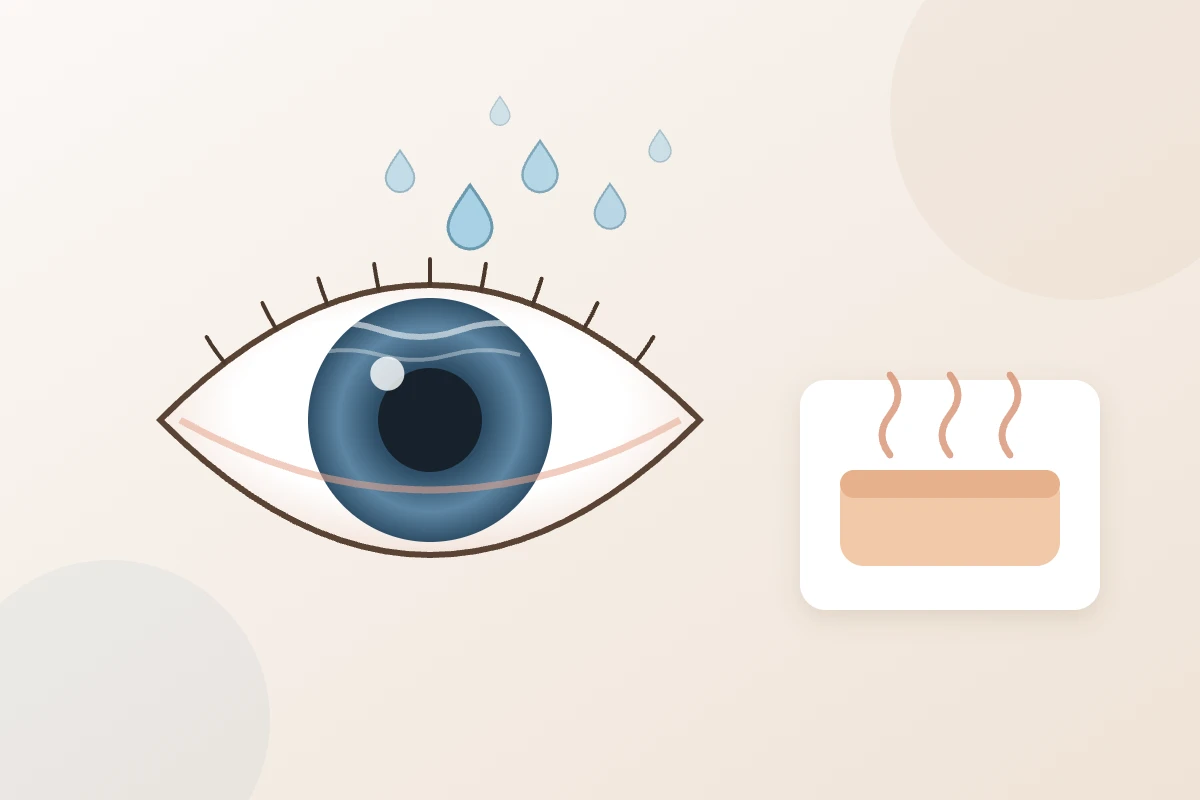
Tears form a thin layer (the tear film) that covers and protects the eye. When there are not enough tears or they evaporate quickly, the surface of the eye becomes irritated. The most common form is evaporative dry eye, caused by dysfunction of the meibomian glands of the eyelids. These glands produce the oily layer that prevents the tears from evaporating.
Long hours of screen use (we blink less), air conditioning and heating, wind, age, hormonal changes in women, certain medicines, contact lenses and some autoimmune diseases.
It is chronic inflammation of the eyelid margins. It causes red, swollen eyelids, flakes or “crusts” at the base of the eyelashes, itching and eyelids stuck together in the morning. It is often linked to meibomian gland dysfunction, rosacea and seborrhoeic dermatitis, and can lead to recurrent chalazia.
At our practice in Karditsa, diagnosis is based on objective, measurable data, with imaging of the eye surface and automated analysis of tear film quality. In this way we identify precisely whether the problem is due to meibomian gland dysfunction, inflammation of the eyelashes or insufficient tear production.
Based on the findings, we design an individualised treatment approach aimed at lasting relief and greater comfort of the eyes. It may include:
Dry eye and blepharitis are usually not “cured” permanently, but with correct and consistent care the symptoms are controlled very well.
▶ Watch the videos: short videos by Dr Siskos on eye health
We see patients from Karditsa, Trikala, Larisa and the whole of Thessaly, offering a well-founded diagnosis and effective treatment of dry eye and blepharitis.
Karditsa: our practice, Karaiskaki 23. Appointments on +30 2441 072740 or online via InstaDoctor.
They relieve the symptoms, but do not always correct the cause. When the problem starts in the eyelids, blepharitis also needs treatment. Preservative-free products are preferable for frequent use.
Place a warm (not hot) compress or a special heat mask on the closed eyelids for 5–10 minutes, then gently clean the base of the eyelashes. The effect shows with consistent, daily use.
Often yes, once the dry eye has been assessed and treated. A change of lens type or fewer hours of wear may be needed.
When we look at a screen we blink much less and tears evaporate faster. Regular breaks (every 20 minutes, look at something far away for 20 seconds) and conscious blinking help.