
Written by Dr Georgios Siskos, Ophthalmic Surgeon (FEBO). Last updated: November 2026.
In brief
Cataract is the most common cause of gradual, age-related reduction in vision. It is due to the gradual ageing of the eye’s natural lens and usually progresses slowly, so many patients adapt without immediately noticing the change. Early diagnosis and proper information are decisive for maintaining good quality of vision.
Cataract usually does not cause sudden loss of vision. It often shows up as:
See a short, illustrated introduction in the article Cataract at a glance.
Cataract treatment is microsurgical and is done by replacing the aged lens. The decision is made individually, after a full eye examination and discussion with the patient. There is no need to rush, but of course no need to wait until the lens “ripens”, as was the case many years ago.
Read in detail: When should a cataract be operated on?
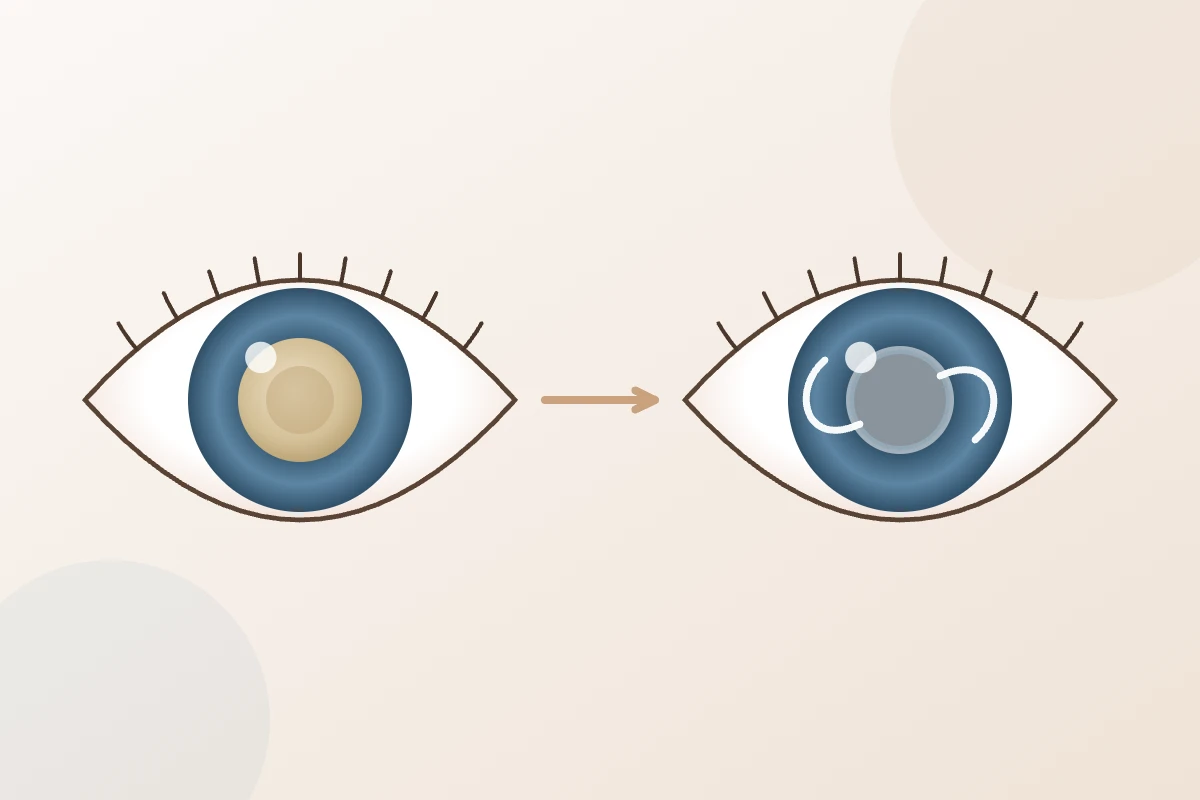
Today, cataract surgery is a short and generally safe operation, with rapid recovery of vision in most cases. During the operation, the cloudy lens is replaced with an artificial intraocular lens, chosen according to the patient’s needs and lifestyle.
Read in detail: How cataract surgery is performed, step by step
The intraocular lens chosen affects how much you will need glasses after the operation. The choice is made based on your eyes, your lifestyle and the needs of your daily life.
Read in detail: How do we choose the right intraocular lens for cataract surgery?
▶ Watch the videos: short videos by Dr Siskos on cataract and intraocular lenses
Proper monitoring and an individualised approach allow safe and effective treatment of cataract. Many patients now choose to be informed and to deal with the problem calmly and with proper planning.
Not necessarily. The decision is not based only on visual acuity, but on the extent to which the cataract affects your daily life. There are people with relatively good vision who have significant difficulty driving or working, while others with lower visual acuity function without particular problems.
In the early stages of cataract, a change in the glasses prescription may offer temporary improvement. However, when clouding of the natural lens is the main cause of reduced vision, no pair of glasses can remove it.
You will usually perceive light, colours or vague movements. You do not clearly watch the surgical procedure.
In the overwhelming majority of cases, no. Intraocular lenses are designed to remain in the eye permanently.
The natural lens has been removed, so the cataract does not form again. However, months or years later the posterior part of the capsule may become cloudy. This condition is called posterior capsule opacification and is usually treated with YAG laser, a simple and short procedure carried out at the practice without any pain and with immediate recovery.
Book an eye examination online via InstaDoctor or by phone on 2441 072740.