Written by Dr Georgios Siskos, Ophthalmic Surgeon (FEBO). Last updated: November 2026.
In brief
Proper care of children’s eyes is crucial for their future vision. Many conditions, such as amblyopia or strabismus, may not show symptoms straight away. At our practice in Karditsa the examination is child-friendly, yet based on accurate, objective measurements of vision, refraction and the health of the fundus.
One eye does not develop normal vision, because the brain “prefers” the other one. It is often caused by a difference in prescription between the two eyes or by a squint. The child usually does not complain, because they see well with the other eye. Treatment is more effective the earlier it starts.
The eyes do not point in the same direction: one may turn inwards, outwards, up or down, constantly or from time to time. After the first few months of life, any squint needs examination.
Hyperopia, myopia and astigmatism are common in children. Myopia has been increasing in recent years, and time spent outdoors appears to help prevent it.
It is often caused by a congenital blockage of the tear duct, which in most cases resolves within the first year. Read more about lacrimal system conditions.
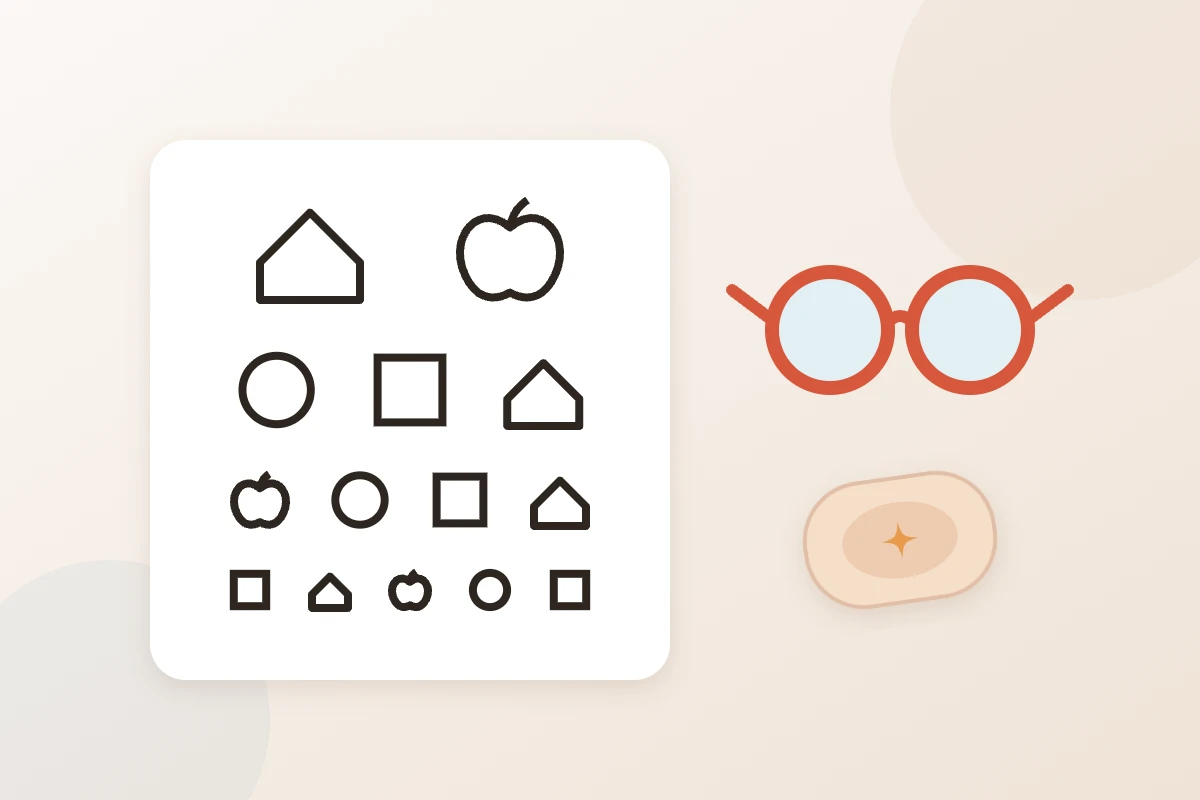
The examination is adapted to the child’s age: with young children we use pictures and games instead of letters. When a more accurate measurement of the prescription is needed, drops that relax the eye’s focusing may be given. Near vision may then be blurred for a few hours.
With modern imaging of the optic nerve and macula (OCT) as well as digital photography, we detect early conditions that are not easily seen on a simple examination.
We design an individualised treatment plan with glasses, orthoptic exercises or monitoring. In amblyopia, apart from glasses, patching of the good eye with a special adhesive patch for a few hours a day may be needed, so that the weaker eye is made to “work”.
▶ Watch the videos: short videos by Dr Siskos on children’s eyes
We see children from Karditsa, Trikala, Larisa and the whole of Thessaly, aiming for the best possible vision in a safe and pleasant environment.
Karditsa: our practice, Karaiskaki 23. Appointments on +30 2441 072740 or online via InstaDoctor.
We recommend a check-up at least once before the child starts school, at around 3–4 years. Earlier if you notice a squint or another sign, or if there is a family history.
No. The right glasses help vision develop normally. They do not make the eyes “dependent”; the prescription changes as the child grows, regardless of the glasses.
Treatment is much more effective in childhood, while the visual system is still developing. That is why early diagnosis is so important.
Long hours of close work and little time outdoors are linked to the onset of myopia. Regular breaks and plenty of time outdoors every day help.