
Written by Dr Georgios Siskos, Ophthalmic Surgeon (FEBO). Last updated: November 2026.
In brief
The conjunctiva and the cornea form the surface of the eye and play a key role in both comfort and quality of vision. Conditions of this area can cause discomfort, pain, redness or blurred vision and often significantly affect daily life, even when they do not initially seem serious. Some conditions are temporary, while others need systematic, specialised monitoring.
Dry eye is one of the most common conditions of the eye surface and is not limited to a simple nuisance. It can affect the quality of vision, tolerance of screens and the use of contact lenses. Treatment is based on correctly diagnosing the type and severity of the disorder, not on one-size-fits-all solutions. Read more on our page on dry eye and blepharitis.
The conjunctiva is the thin, transparent membrane that covers the white of the eye. Its inflammation (conjunctivitis) can be allergic, viral or bacterial and causes redness, itching, tearing or discharge. The allergic form usually comes with intense itching, while the viral form is highly contagious.
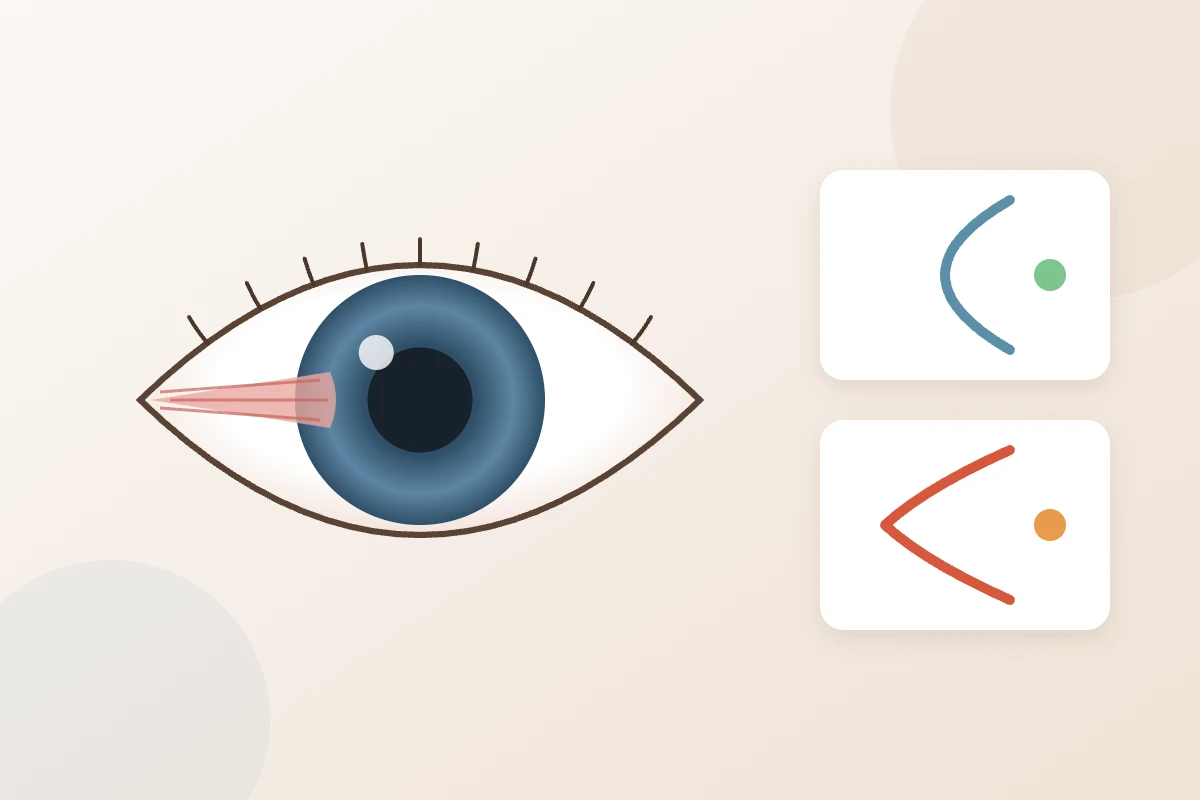
These are benign growths of the conjunctiva, usually on the inner side of the eye, linked to exposure to sun, wind and dust. A pterygium can extend onto the cornea and cause irritation, astigmatism or, less often, reduced vision. When it grows or is very bothersome, it is removed surgically.
The cornea gradually thins and takes on a cone shape, resulting in increasing astigmatism and blurred vision. It usually starts in adolescence or young adulthood and is linked to vigorous eye rubbing and allergies. Early diagnosis, with special measurements of the cornea, is important, because progression can be stabilised with corneal cross-linking, while vision is corrected with glasses or special contact lenses.
This is inflammation or infection of the cornea, more common in contact lens wearers, especially when they sleep in their lenses or rinse them with tap water. It causes pain, redness, sensitivity to light and blurred vision and needs immediate examination and treatment.
Most conjunctival lesions are benign. A lesion that grows, changes colour or develops blood vessels should be checked, and in some cases needs removal and laboratory (histological) examination.
The cornea is the main focusing lens of the eye. Changes or inflammation of its surface can significantly affect the clarity of vision. Early recognition and targeted treatment are crucial to avoid permanent effects.
The surface of the eye is examined at the slit lamp (the ophthalmologist’s microscope), often with a special yellow dye (fluorescein) that shows where the surface has been damaged. When needed, the examination is completed with imaging of the eye surface and tear film analysis.
▶ Watch the videos: short videos by Dr Siskos on eye health
Proper assessment of the eye surface requires a detailed examination and an individualised approach. With responsible monitoring and appropriate treatment, many conjunctival and corneal conditions are treated effectively.
Karditsa: our practice, Karaiskaki 23. Appointments on +30 2441 072740 or online via InstaDoctor.
Viral and bacterial conjunctivitis spread easily through hands and towels. Wash your hands often, do not share towels and avoid touching your eyes. Allergic conjunctivitis is not contagious.
Not always. Small pterygia are monitored, and the irritation is treated with lubricating drops and sun protection. Removal is recommended when the pterygium grows towards the centre of the cornea, causes astigmatism or is very bothersome.
Vigorous and frequent rubbing stresses the cornea and is linked to the onset and progression of keratoconus. If your eyes itch, the cause, often allergy, should be treated.
Remove the lenses immediately, do not put them back in, and contact an ophthalmologist the same day. Pain with redness and sensitivity to light in a lens wearer may be due to keratitis, which needs immediate treatment.