
Written by Dr Georgios Siskos, Ophthalmic Surgeon (FEBO). Last updated: November 2026.
In brief
Glaucoma is a chronic disease that can cause loss of the visual field, or even complete blindness, without warning symptoms. At our practice in Karditsa, diagnosis and monitoring are based on well-documented, objective tests, such as optic nerve OCT, visual fields, pressure measurement and fundus photography. We assess the progression of the disease accurately and adjust treatment based on real data.
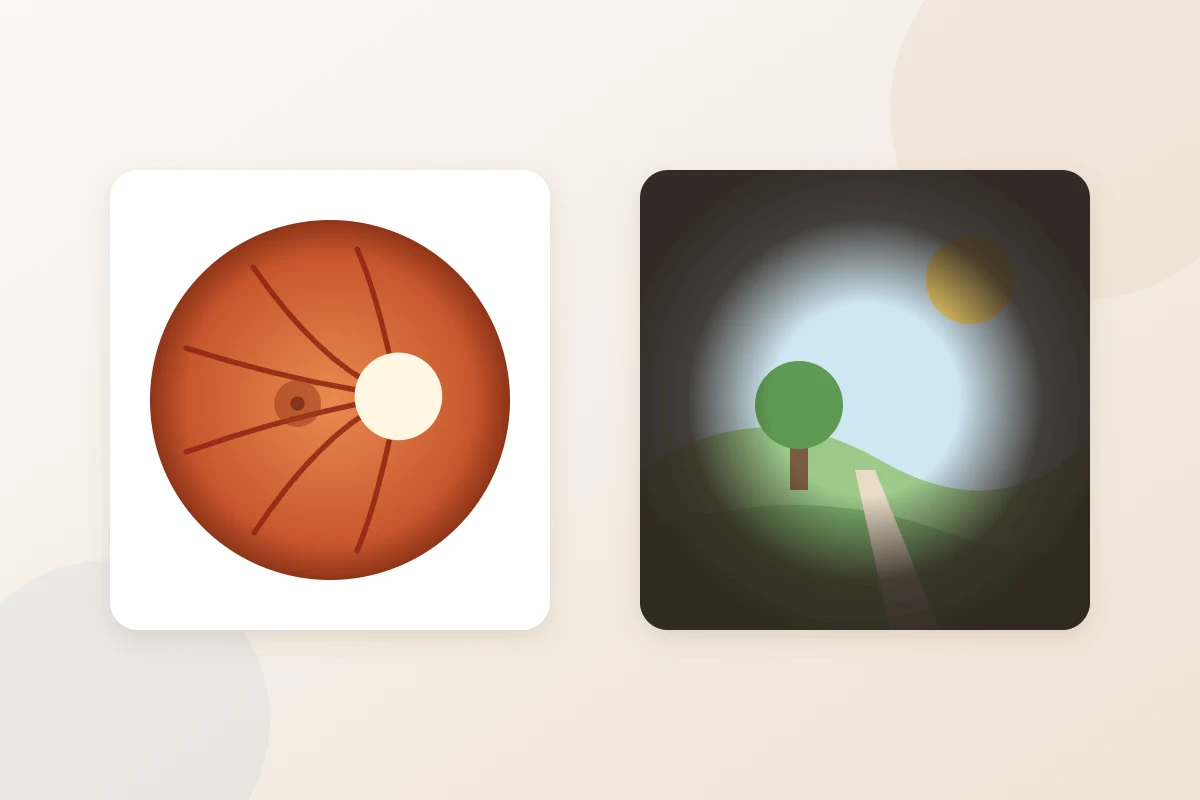
This is the most common type. It progresses slowly and painlessly, and vision loss starts at the periphery. That is why patients usually do not notice it in time.
The drainage of fluid from the eye becomes blocked and the pressure can rise suddenly. An acute attack causes severe eye pain, redness, blurred vision, headache and nausea, and needs emergency treatment. In eyes with a narrow angle, a preventive laser can reduce the risk.
Some people have raised pressure or a suspicious-looking optic nerve, without damage. They need regular monitoring, so that treatment can start if signs of damage appear.
Diagnosis is not based on a single pressure reading. We combine intraocular pressure measurement with optic nerve OCT, visual field testing and fundus photography. Monitoring follows an organised protocol, comparing the tests over time, to ensure stable, long-term protection of vision.
Damage that has already occurred cannot be reversed, but with the right treatment progression can be slowed or stopped. The aim is to lower the eye pressure to a level that is safe for that particular optic nerve.
▶ Watch the videos: short videos by Dr Siskos on glaucoma and eye pressure
We see patients from Karditsa, Larisa, Trikala and the whole of Thessaly, offering comprehensive glaucoma care.
Karditsa: our practice, Karaiskaki 23. Appointments on +30 2441 072740 or online via InstaDoctor.
Yes. In some patients, damage to the optic nerve occurs with pressure within the normal range (normal-tension glaucoma). That is why the check-up always includes examination of the optic nerve and not just pressure measurement.
Glaucoma is a chronic disease and usually needs lifelong treatment. In some patients, SLT laser can reduce or delay the need for drops.
No. It is done at the practice, with local anaesthetic drops, takes a few minutes, and the patient returns to their activities straight away.
A family history significantly increases the risk. If a parent or sibling has glaucoma, regular check-ups from an earlier age are recommended.